
Ask most people how the internet gets from New York to London and you’ll hear one of two answers: “satellites” or “I don’t know, magic?” The real answer is much stranger. Roughly 99 percent of all international internet traffic travels through fiber optic cables lying on the ocean floor. Right now, this very web page probably passed through one. Behind every “cloud” is a physical network of glass, steel, and about a dozen specialized cable-laying ships. The internet lives, in a very literal sense, at the bottom of the ocean. It’s one of those facts that, once you know it, quietly changes how you see the world.
What These Cables Actually Are
Undersea cables are roughly the thickness of a garden hose, although the ones in shallow water near the coast are thicker because they need more armoring against anchors, fishing trawlers, and curious marine life. Inside, under several layers of shielding to keep out water, are a handful of hair-thin glass fibers. Laser pulses shoot through those fibers at nearly the speed of light, encoding the bits that make up emails, videos, banking transactions, and the occasional cat photo.
A single modern cable can carry hundreds of terabits per second. That’s enough to stream millions of 4K videos simultaneously. The newest cables, being laid right now in the 2020s, can carry over 500 terabits per second on a single cable. There are more than 500 active cables crisscrossing every ocean on Earth, connecting every inhabited continent and most major islands. The total length of deployed undersea cable is longer than the distance from Earth to the Moon, and it’s growing every year.
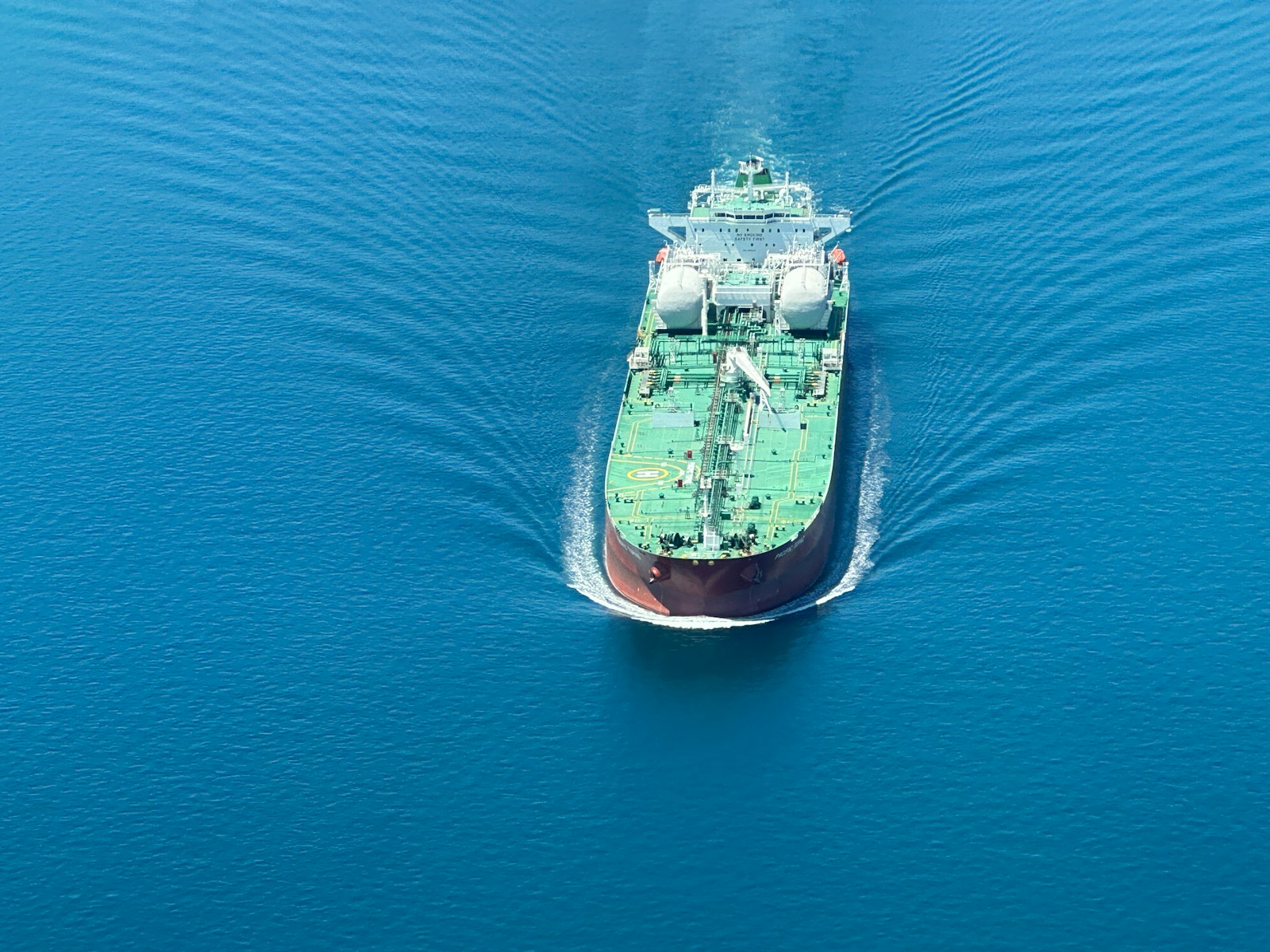
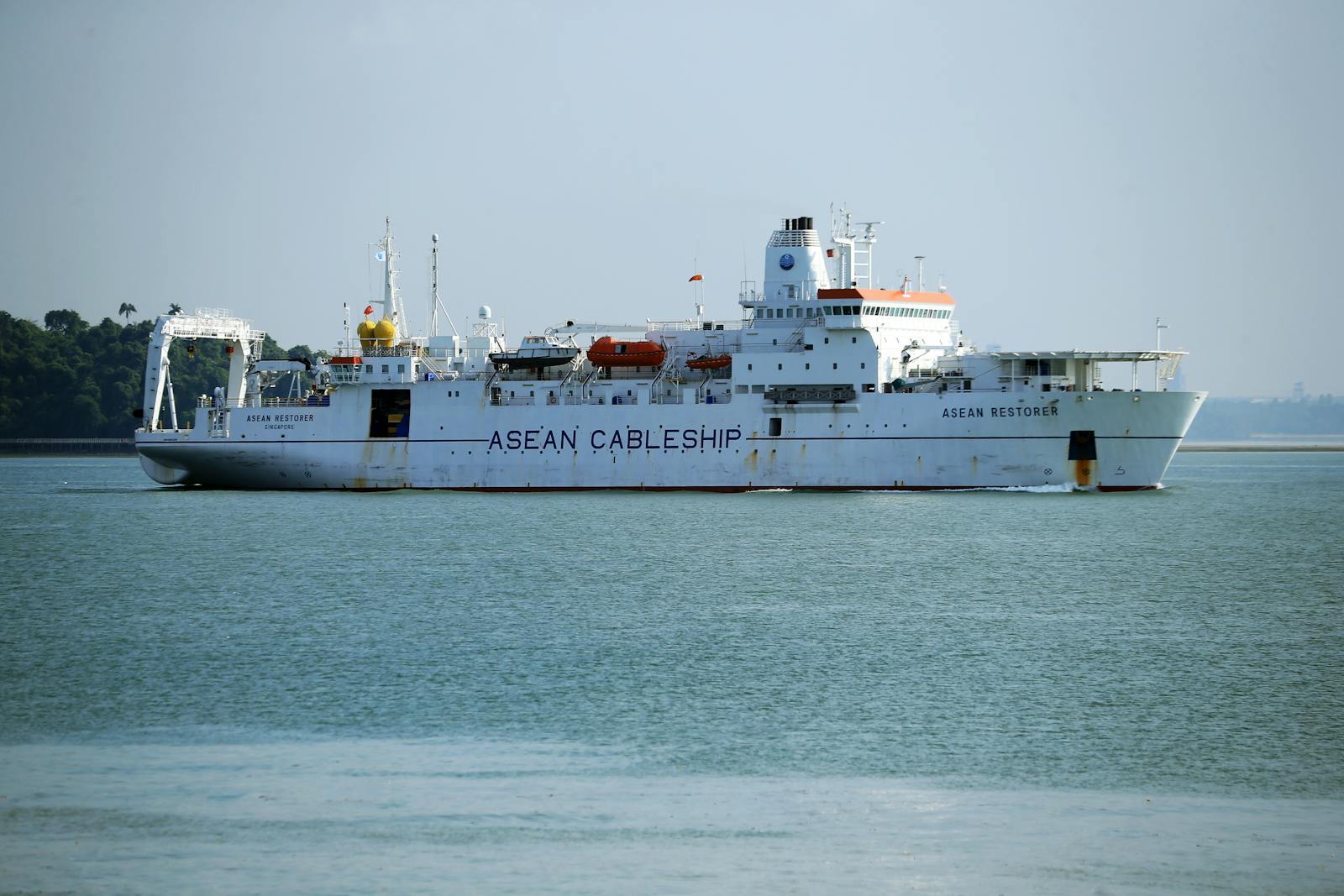
Special ships lay them down. Picture a ship about the size of a cruise ship, carrying thousands of kilometers of cable coiled in huge tanks below deck. The ship moves slowly across the ocean, paying out cable behind it at a carefully controlled rate. In shallow water, a plow drags the cable into a trench on the seabed to protect it from anchors. In deep water, they simply let it rest on the ocean floor. A full cable-laying project can take a year or more and cost several hundred million dollars. There are only a handful of companies in the world that can actually do this work, and their ships are among the most specialized vessels afloat.
Why Not Satellites?
Satellites get the marketing, but physics gets the contract. Three big reasons:
- Capacity. A single large undersea cable moves hundreds of times more data than an entire satellite constellation. Light moving through glass fiber is much more efficient than radio waves moving through the atmosphere, where they get absorbed and scattered by weather, clouds, and just plain air.
- Latency. A traditional geostationary satellite sits 36,000 kilometers up. Your signal has to travel all the way up, all the way back down, and then sometimes all the way back again. That round trip adds noticeable delay, enough to make video calls feel weird and enough to make online gaming essentially impossible.
- Cost per bit. Laying a glass fiber under the sea turns out to be far cheaper, per gigabit of capacity, than launching a rocket and maintaining a satellite in orbit. It’s not even close. A single cable can cost $500 million but handle the traffic of thousands of satellites and last for 25 years with minimal maintenance.
Newer low-Earth-orbit satellite constellations like Starlink help enormously in remote places that cables can’t reach. Rural areas, ships at sea, airplanes, mountain research stations, and war zones all benefit from satellite internet in ways they couldn’t before. But even with tens of thousands of satellites, they still can’t match the sheer throughput of a single modern cable, and they probably never will. The numbers just don’t work.
Who Owns the Cables
For most of the 20th century, undersea cables were owned by consortiums of national telephone companies. AT&T would team up with British Telecom and a few European partners, split the cost, and split the capacity. The first transatlantic telephone cable, laid in 1956, could handle thirty-five simultaneous calls. That sounds small, but it was a revolution; before it, calls between New York and London went by shortwave radio, which was scratchy and unreliable.
Lately, the ownership has shifted dramatically. Google, Meta, Microsoft, and Amazon now fund or own a huge share of newly laid cables. Why? Because they move so much of their own internal traffic, photos to data centers, videos between regions, backups across continents, that it’s cheaper for them to build the pipes than to rent them. Google alone has invested in more than twenty cables. Some cables are jointly owned by a dozen entities, with each partner getting a fraction of the capacity. Others are entirely private, running directly between two data centers owned by the same company.
Geopolitics plays a growing role. Which countries the cable lands in, which governments can tap the fibers, and whose ships do the laying are all sensitive questions now. Some cables deliberately avoid certain countries for political reasons. Some routes exist specifically to reduce reliance on cables that pass through regions seen as unstable. The seafloor is increasingly a map of international relationships as much as a map of geography.
There are roughly 550+ active submarine cables carrying ~99% of intercontinental internet traffic. Damage one of them, and entire countries can lose latency, capacity, or connectivity for days.
What Happens When One Breaks
Cables get damaged a few hundred times per year, mostly in shallow water. The culprits are usually fishing trawlers dragging nets along the seafloor, ship anchors being dropped in the wrong place, or underwater earthquakes and landslides. Sharks occasionally bite them, which is genuinely true and made worse by the electromagnetic fields that attract some species. There’s footage of sharks gnawing on cables, which is both hilarious and expensive.
When a cable breaks, traffic gets rerouted almost instantly through other cables. The internet is designed to have many paths for exactly this reason. Most users never notice. Repair ships then motor out, grapple the broken section off the seafloor with a hook, haul it up, splice it back together, and drop it back down. This process is slow, expensive, and completely invisible to the hundreds of millions of people whose traffic never stopped flowing. A repair job in deep water can take weeks. A repair job on the bottom of the North Atlantic in winter can take longer, because ships can’t work in the worst storms.
The Security Question
Undersea cables are vulnerable in ways most people don’t think about. Submarines can tap them. A ship with the right equipment can cut them. There have been several incidents in recent years of cables being mysteriously damaged in the Baltic Sea and the Red Sea, and investigators have pointed fingers at everything from commercial accidents to state-sponsored sabotage. Countries are starting to treat undersea cables the way they treat oil pipelines: critical infrastructure that needs protection, monitoring, and redundant alternatives.
Dragging anchors, fishing trawlers, and the occasional state actor cause roughly 150–200 undersea-cable breaks every year. The internet does not "go down" because redundancy catches the fall, but each break costs millions and takes weeks to repair.
A Short History Lesson
The first transatlantic cable wasn’t for the internet. It was for telegraphs, and it was laid in 1858, connecting Ireland to Newfoundland. It worked for about three weeks before burning out, because the engineers cranked up the voltage too high trying to push signals through it. A second attempt in 1866 was more successful and marked the moment when Europe and North America could exchange messages in minutes instead of weeks. The modern undersea cable industry is a direct descendant of that Victorian engineering achievement, just with glass fiber instead of copper wire and lasers instead of Morse code.
The shift from copper to fiber optics happened in the 1980s and 1990s, and it increased the capacity of undersea cables by something like a factor of a million. Copper cables carried a few thousand phone calls. Early fiber cables carried hundreds of thousands. Modern fiber cables carry billions of simultaneous connections. The actual cable hasn’t gotten much thicker, because glass fiber is a better medium than copper by almost every measure. It’s also much harder to tap without being detected, because any physical intrusion into the fiber disrupts the laser signal enough for monitoring systems to notice.
How Data Actually Travels Through a Cable
Inside the fiber, data travels as pulses of light, with different colors of light representing different channels. A single fiber can carry hundreds of distinct wavelengths simultaneously, each carrying its own stream of data. This is called wavelength-division multiplexing, and it’s the main reason capacity has kept increasing over time even though the physical cables haven’t changed much. Every few years, engineers figure out how to pack more channels into the same fiber, and the capacity of existing cables goes up without anyone having to lay new ones.
The light signals also lose strength as they travel, so every 50 to 100 kilometers along the cable there’s a small amplifier, powered by electricity sent down the cable from shore. These amplifiers are among the most reliable devices ever built. They sit on the ocean floor for decades at a time, in total darkness at crushing pressure, boosting laser signals without needing maintenance. When one does fail, the cable has to be repaired, which is why redundancy matters so much.
My Honest Take
The internet likes to present itself as a cloud, which is lovely branding and almost entirely wrong. The internet is a very physical thing. It’s glass, steel, ships, and a few thousand technicians who go to sea to fix it when things break. It runs through geography. It crosses borders under the water. It can be cut by an anchor, tapped by a submarine, or destroyed by an earthquake. Next time someone tells you the internet lives “in the cloud,” remind them it actually lives at the bottom of the ocean, and the only reason we don’t think about it is because it almost always works.
Key Takeaways
- The "cloud" is a misnomer, most of it lives on the seafloor.
- Cable damage is routine; redundancy is what keeps the internet feeling continuous.
- Geopolitics increasingly treats submarine cables as critical infrastructure, because they are.
Start Your Free Trial Today
Full All-Access to hands-on labs, PBQs, and certification tracks, no credit card required.
Start Free Trial