
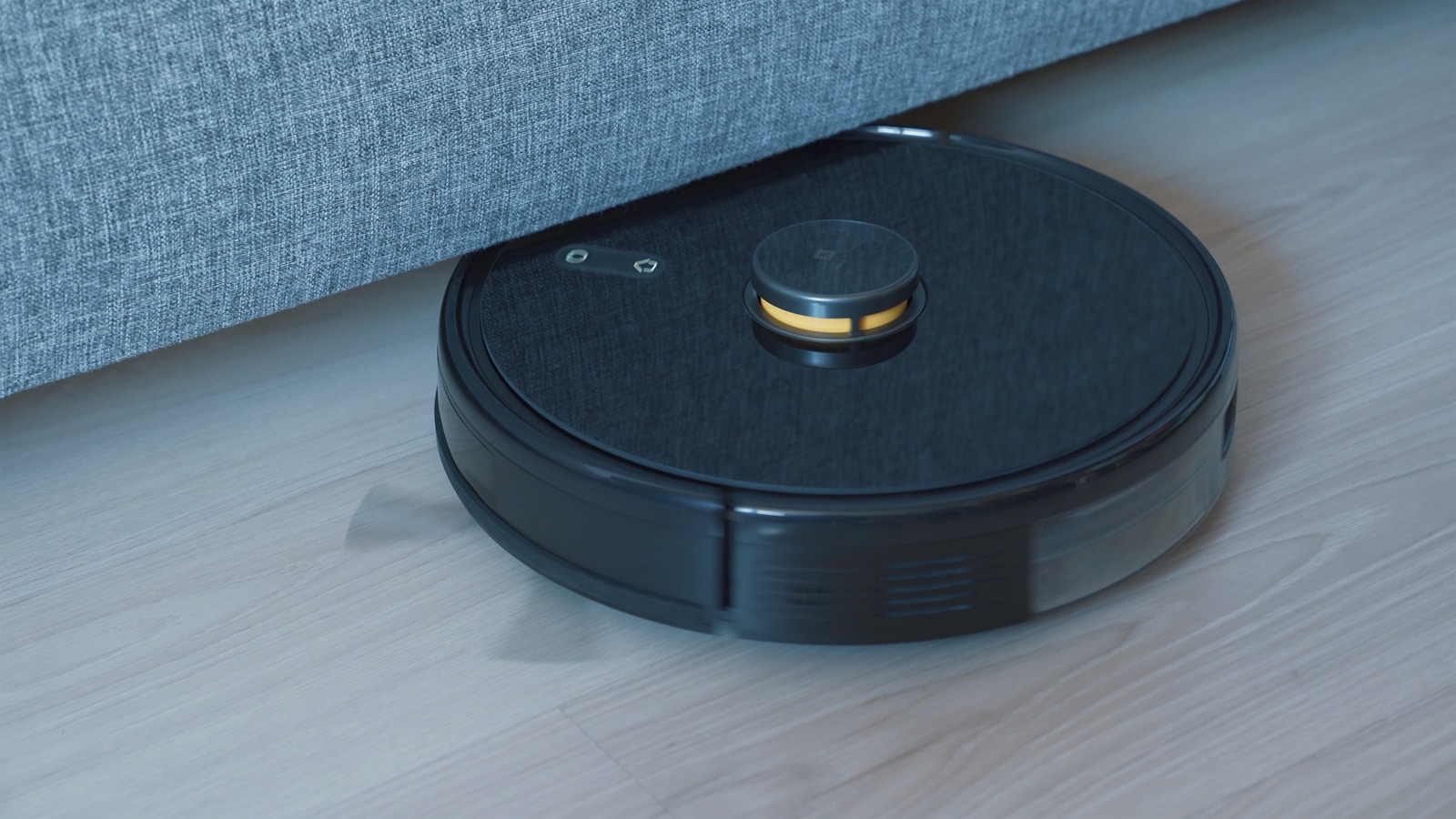
The first robot vacuums were, let’s be kind, charmingly stupid. They bumped into walls, got stuck under couches, and cleaned the same three square feet of hallway forty times in a row while ignoring the rest of the house. Today’s robot vacuum? It knows where your kitchen ends and your living room begins. It remembers where the dog bowl sits. Some models can even tell you which room collects the most dust during the week. That’s a huge leap in just over a decade. Here’s how it happened, and what your vacuum is quietly doing with all that information behind the scenes.
From Bumping to Mapping
Early models used what engineers politely call “random walk” navigation. Translation: drive in a straight line until you hit something, turn a random amount, and try again. It worked, sort of. It was also why a thirty-minute cleaning job somehow took three hours, and why your vacuum ended up stuck under the couch every other day. Random walk is mathematically guaranteed to cover the whole room eventually, but “eventually” can be a very long time.
Modern robot vacuums do something much smarter. They build a map of your home, remember it, and plan efficient routes the way you would if you were vacuuming yourself: start at one end, work across in neat rows, don’t miss spots, don’t repeat. This change happened around 2015 and has been accelerating ever since. The average mid-range vacuum today has better navigation than a million-dollar research robot had in 2005.
The reason mapping became possible was a combination of cheaper sensors and better software. Small laser rangefinders that cost $10,000 in 2010 cost $30 today. Cameras got good enough to see in dim light. Processors small enough to fit inside a vacuum got powerful enough to run real mapping algorithms. And a whole generation of graduate students who had worked on self-driving cars started joining the companies making household robots.
How They Actually See Your House
Today’s vacuums use one of three main tricks to find their way around, and the better ones combine all three:
- LiDAR. A small spinning laser on top of the vacuum measures distance to every wall and object, hundreds of times per second. Same basic technology self-driving cars use, just way smaller and cheaper. You can often spot LiDAR vacuums by the little puck on top that keeps the robot slightly taller than it would otherwise be.
- Visual SLAM. That stands for “simultaneous localization and mapping.” The vacuum watches the room with one or more cameras and figures out where it is by recognizing visual landmarks: a corner here, a chair leg there, the specific pattern of your rug, the gap under the kitchen cabinet.
- Gyroscopes and wheel sensors. Even the cheapest models have these. They track how far the wheels have turned and in which direction, building a rough map by dead reckoning. Useful as a backup when cameras and LiDAR get confused by reflective floors or dark corners.
High-end models use all three at once and cross-check the results, which is why they almost never get lost anymore. Some newer models even use artificial intelligence trained on thousands of images to recognize specific obstacles: that’s a dog toy, that’s a phone charger, that’s a sock. Instead of trying to suck them up and getting tangled, the vacuum drives around them. Some take a photo and add it to your app so you can see exactly what it avoided.
What the Vacuum Does With the Map
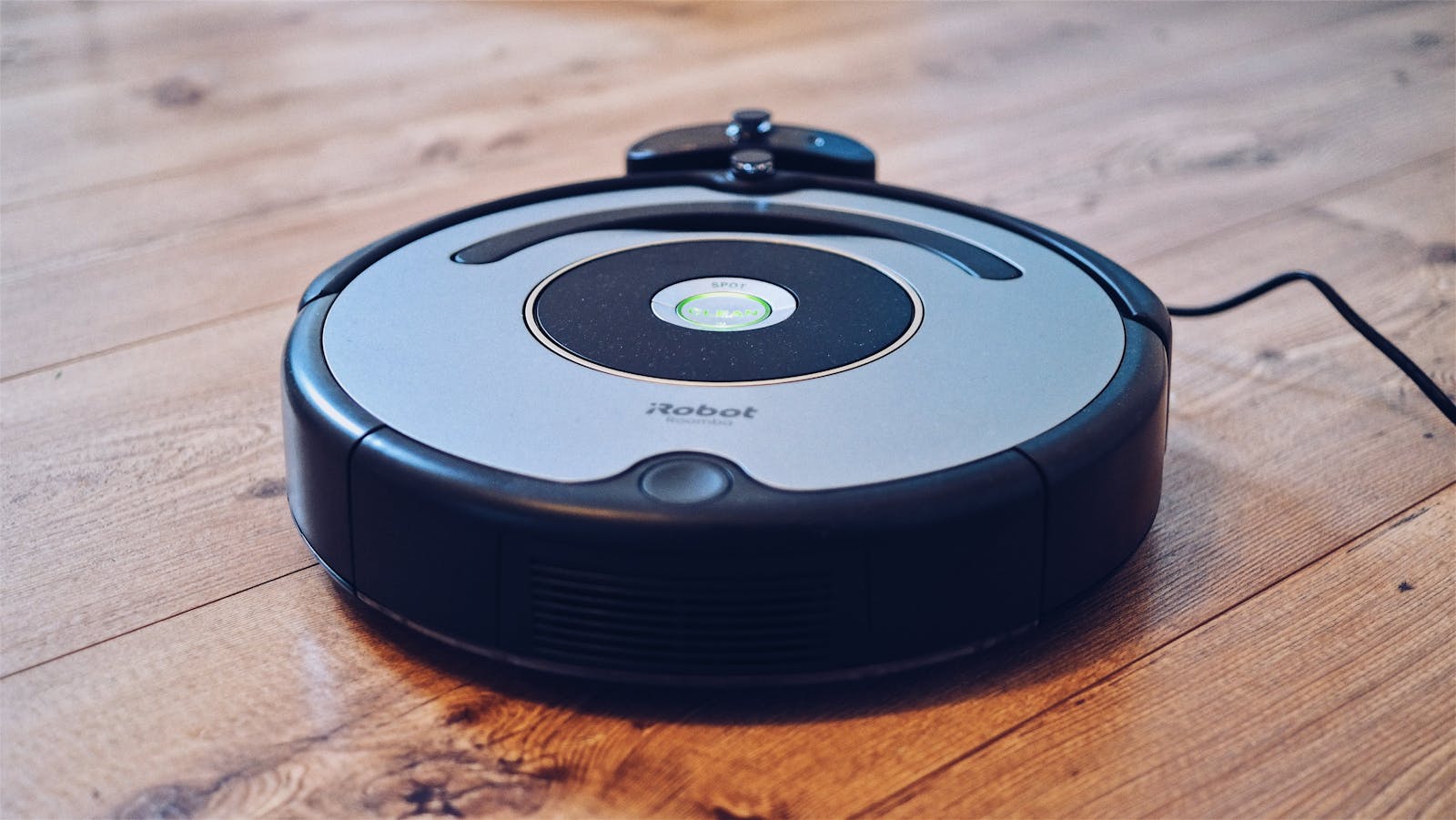
Here’s where it gets interesting. That map isn’t just for navigation. It’s data, and the company that made the vacuum does a lot with it. You get a floor plan in the app, so you can label rooms and send the vacuum to clean only the kitchen before guests arrive. You can draw “keep-out zones” around the dog bowl or that one rug with the tassels that jams the brush roll every time.
The vacuum tracks which areas get dirty most often, which can reveal surprising things about your household habits. It’s almost always the path from the front door to the kitchen, plus wherever the kids drop backpacks, plus wherever the cat sheds. Premium features like “carpet boost,” “deep clean on the kitchen floor,” and “edge cleaning along the baseboards” all depend on the map being accurate. Without a map, the vacuum has no way to know where those specific zones are.
The app integrations are also a new frontier. Your vacuum can now be set to start cleaning when you leave the house, triggered by your phone’s GPS or by a smart lock detecting your departure. It can pause automatically when it hears a baby crying through the microphone on a smart speaker. It can coordinate with your robot mop, doing a vacuum pass first and then triggering the mop to follow. The idea is a home that cleans itself while you’re away. Whether that’s convenient or creepy depends on how you feel about a cleaning machine that knows your schedule.
In some cases, that floor plan gets uploaded to the cloud. Sometimes that’s to improve the service: bug fixes, algorithm tweaks, remote troubleshooting when support needs to see why your vacuum is getting stuck in the same corner. Sometimes it’s to share with advertisers, to share with smart home platforms, or to feed into the company’s broader data business. In 2022 there was a minor scandal when photos taken by robot vacuums ended up posted online, after being shared with contractors hired to label training data for image recognition models. Real photos from real people’s homes, including people on the toilet. Check the privacy policy. Really.
Some premium robot vacuums upload room maps, object photos, and usage data to the cloud. If your model has a camera, read the privacy policy before you buy, not after.
The Mopping Wars
A whole new category of robot vacuum has emerged in the last few years: the vacuum-mop combo. These have a water tank, a cleaning pad, and the ability to both vacuum and wet-mop. Some can even lift their mop pads automatically when they detect carpet, which is impressive engineering. The high-end versions dock in a base station that empties their dustbin, refills their water tank, and rinses out their dirty mop pad with clean water. The base station is sometimes the size of a mini fridge and costs as much as a used car.
Whether these are worth it depends on your floors. If you have a lot of hardwood, tile, or vinyl, a mopping vacuum can genuinely reduce how often you need to mop by hand. If your home is mostly carpet, it’s overkill. If you have pets with muddy paws, the automatic mop-rinsing base is genuinely magical. If you don’t, it’s an expensive solution to a problem you don’t have.
Pets, Hair, and the Real-World Test
The honest test of any robot vacuum is how it handles pet hair. Cheap models get tangled within days in a home with a shedding dog or a long-haired cat. Better models use rubber brush rolls instead of bristled ones, because rubber doesn’t catch hair the way bristles do. The very best models add auto-detangling mechanisms that run a small cutter along the brush roll at regular intervals.
If you have pets, prioritize brush roll design over suction numbers in the product specs. A vacuum with 4,000 Pa of suction that tangles every day is worse than one with 2,500 Pa that keeps running for months without intervention. Read reviews specifically from pet owners. The difference between a good pet-household vacuum and a bad one is huge, and you can’t tell from the marketing copy.
Stairs are the other hard limit nobody likes to talk about. No robot vacuum on the market can reliably handle stairs. A few have cliff sensors that let them navigate near stair edges without falling, but if your home has more than one floor, you either need to carry the vacuum between floors or buy more than one. Most people settle for a single vacuum on the main floor and accept that the other floors get old-fashioned vacuuming.
Check three things: does the robot store maps locally or in the cloud, can you delete them on demand, and is the camera feed ever used for anything besides navigation.
How Good Are They, Honestly?
A good robot vacuum today, at around $400 to $800, will do a better job than most people do with a stick vacuum, as long as the floor is mostly clear. It won’t replace a deep clean with an upright vacuum, and it can’t handle stairs. It will, however, vacuum your entire first floor every day without you thinking about it, which over a year adds up to a home that’s noticeably cleaner than one that gets vacuumed on weekends.
The $200 models without mapping still work, but they’re inefficient and frustrating. You’ll spend more time rescuing them from under the couch than you’ll save on vacuuming. The $1,500 models that also mop and self-empty are impressive but not always worth the jump in price. The sweet spot is the mid-range mapping vacuum: smart enough to clean the whole house efficiently, simple enough to actually use every day.
My Honest Take
Your robot vacuum now knows the layout of your home better than most of your houseguests. That’s useful. It’s also worth knowing, because a floor plan is data, and where data goes, questions follow. Buy the vacuum for the vacuuming, and read the privacy policy before you connect it to Wi-Fi. A clean house is nice. A clean house whose layout lives on someone else’s server is a trade-off worth making consciously.
Key Takeaways
- LiDAR + visual SLAM is what turned bumper-bots into actual floor planners.
- The map is the product, that is what enables zones, no-go areas, and per-room schedules.
- A camera-equipped vacuum is, by definition, a sensor in your home. Treat the privacy policy like a security control.
Start Your Free Trial Today
Full All-Access to hands-on labs, PBQs, and certification tracks, no credit card required.
Start Free Trial